NEWS
UPI may not stay free, RBI Guv hints
Running a digital payments infrastructure on zero-charge model can’t be sustainable long-term; someone will have to bear the cost, says RBI Governor Sanjay Malhotra.



Running a digital payments infrastructure on zero-charge model can’t be sustainable long-term; someone will have to bear the cost, says RBI Governor Sanjay Malhotra.
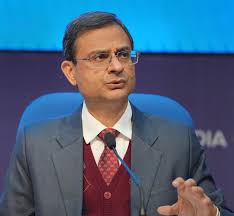
Reserve Bank of India Governor Sanjay Malhotra’s statement on Unified Payments Interface (UPI) on Friday signals what is sure to come; the users of UPI may not enjoy it for free forever.
The explosion of UPI usage, which has doubled in just two years from 31 crore to over 60 crore, has come at a cost in putting up and maintaining a complex digital payments infrastructure. And the users are not charged anything so far.
So, who has paid for it? The government has been subsidising banks and payment service providers to keep the systems running on a ‘free’ model. The purpose behind this is to make widely accessible a secure digital payments system.
According to the latest RBI data, 18.4 billion UPI transactions were processed in June worth Rs 24.03 lakh crore, overtaking global giants like Visa in terms of volume.
But running a long-term sustainable model like this can’t remain free; somebody has to pay for it.
“Costs will have to be paid, someone will have to bear the cost,” Malhotra said, while speaking at an event in Mumbai organised by Financial Express.
He indicated that no service which handles billions of transactions monthly can remain completely free forever.
This may signal the return of UPI payments being charged with a per transaction fee called the Merchant Discount Rate (MDR). This is a charge merchants earlier used to pay to banks that process debit and credit card payments, usually in the range of 1-3%. But since January 2020, MDR has been abolished on RuPay debit cards and UPI transactions to boost digital payments adoption.
Banks and fintechs have held the view that the no-charge model is no longer sustainable due to rising costs in technology and infrastructure.
The government has, however, maintained that there should be no direct levy on users or merchants and UPI is for the ‘public good’. To get the system going, it has offered incentives to ecosystem players. This thinking has been in line with the public sentiment, with surveys showing that most users would reduce or entirely stop using UPI if they were charged on transactions.
The government’s payout under the incentive scheme for UPI transactions has increased from Rs 957 crore in 2021-22 to Rs 3,268 crore in 2023-24. For 2024-25, the revised estimate for the total payout under the scheme was Rs 2,000 crore.
The decision on whether to continue with the current zero-charge policy ultimately lies with the government.
In June, the government denied speculations that MDR would be charged on UPI transactions.
“Such baseless and sensation-creating speculations cause needless uncertainty, fear and suspicion among our citizens. The Government remains fully committed to promoting digital payments via UPI,” the finance ministry said on X on 11 June.
There is no indication yet on whether users or merchants will eventually bear the cost. It could also be possible that both need to pay.
Meanwhile, users hope that the era of free UPI payments does not end.